When Your Blood Pressure Won't Budge: Could Renal Denervation Be the Answer?

Living with high blood pressure that refuses to respond to medication can feel frustrating and frightening in equal measure.
If you've been told you have resistant hypertension, you're probably wondering what that means for your health, and whether there's anything more that can be done.
The good news is that there is.
A procedure called renal denervation is offering real hope to patients in exactly this situation, and it's now available at One Heart Clinic under the expert care of Dr Sayan Sen, who was involved in the development of this new technique. He is one of a very small number of cardiologists in the UK offering this treatment.


What is Resistant Hypertension — And Should You Be Worried?
High blood pressure (hypertension) is remarkably common. According to the World Health Organisation, the number of adults living with hypertension has risen from 650 million in 1990 to 1.4 billion in 2024, representing around one in three adults aged 30 to 79 worldwide. It is one of the most significant public health challenges of our time, and a leading cause of strokes, heart attacks, heart failure, and kidney disease.
For some people, a combination of lifestyle changes and medication like stains brings it under control. But for a surprisingly high number of individuals, blood pressure remains stubbornly high even when taking three or more appropriately prescribed medications, including a water tablet (diuretic). This is what doctors call resistant hypertension.
It's entirely natural to feel anxious if you've been told your medication isn't working. After all, you're doing what you're supposed to do, like taking your tablets and attending your appointments, and yet your blood pressure still won't come down to a safe level. Resistant hypertension isn't a reflection of anything you've done wrong. It's a recognised medical condition, and it accounts for a meaningful proportion of people being treated for high blood pressure.
Why does it matter so much? Because the higher your blood pressure remains, the greater your long-term risk of serious cardiovascular events. Keeping blood pressure well controlled is one of the most powerful things you can do to protect your heart, brain, and kidneys. So if standard treatments aren't achieving that, it makes sense to explore what else is available, and that's where renal denervation comes in.
What Is Renal Denervation?
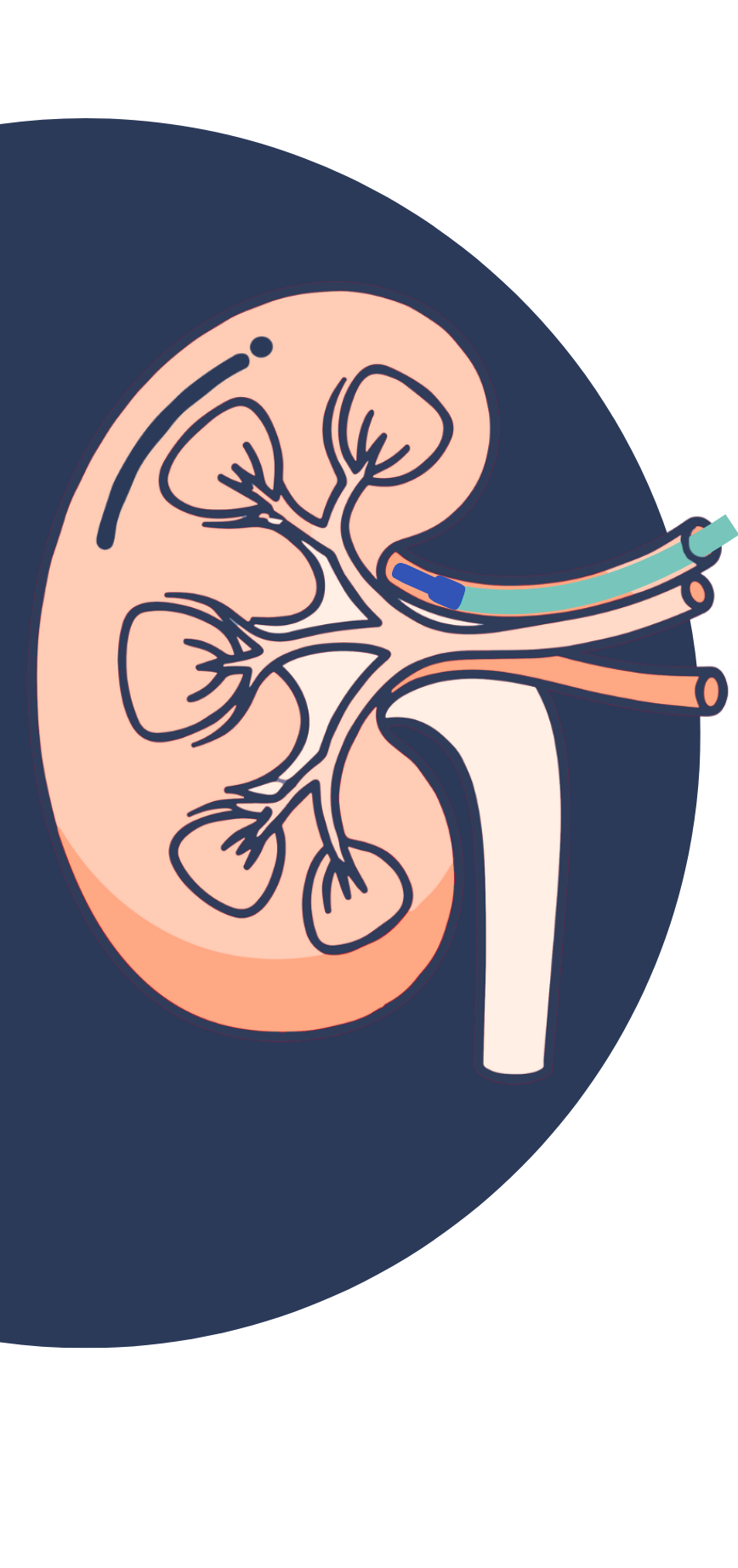
Renal denervation (sometimes abbreviated to RDN) is a minimally invasive, catheter-based procedure that targets the nerves running along the renal arteries — the arteries that supply blood to the kidneys. These nerves are part of the sympathetic nervous system, which plays a significant role in regulating blood pressure. In people with resistant hypertension, this system is often overactive, contributing to persistently elevated readings.
During the procedure, a thin, flexible tube (catheter) is guided through a small incision, typically in the groin, and up to the renal arteries. Once in position, it delivers carefully controlled energy (either radio-frequency or ultrasound) to disrupt those overactive nerves. The aim is to reduce the nerve signals that are driving blood pressure up, without affecting the kidneys themselves.
It's important to understand that renal denervation is not a replacement for your medication or a reason to abandon a healthy lifestyle. It works best as an additional tool alongside existing treatments, for patients who have already tried optimising their medications and still aren't reaching a safe blood pressure level.


What Does The Evidence Say?
In short, renal denervation works, and the results last. Clinical trials have shown that renal denervation produces meaningful reductions in blood pressure that are sustained over at least three years, which is reassuring for anyone wondering whether the benefits might wear off over time.
To put the numbers in perspective: In a major international trial tracking patients over three years, those who had the procedure achieved significantly greater blood pressure reductions than those who didn’t, roughly equivalent to the effect of adding another blood pressure medication to your daily routine. For people who are already struggling to manage their blood pressure on multiple tablets, that additional reduction can make a real difference to their long-term health.
Real-world data from a large international registry of over 3,100 patients, published in the International Journal of Cardiology in 2025, backs this up, and interestingly, the benefit appeared to increase gradually over time rather than plateau. Patients were also significantly less likely to experience dangerous spikes in blood pressure after having the procedure.
Recent European Society of Cardiology hypertension guidance supports considering RDN in adults with confirmed resistant hypertension, and in some with uncontrolled hypertension at high cardiovascular risk, after shared decisionmaking. It should follow optimisation of lifestyle measures and guideline-directed drug therapy.


What To Expect During Renal Denervation Procedure
Renal denervation is not suitable for everyone with high blood pressure — it's specifically aimed at people with true resistant hypertension, or those who cannot tolerate the medications needed to control their blood pressure. Before being considered for the procedure, you’ll need a thorough assessment to rule out underlying conditions that may be driving hypertension and to confirm that pseudo-resistance isn't a factor — for example, difficulties with medication adherence or inaccurate blood pressure measurements.
Renal denervation is typically performed under local anaesthetic and sedation, meaning you’re awake but comfortable throughout. The catheter is inserted through the femoral artery in the groin, guided to the renal arteries, and the energy treatment is delivered. The procedure itself usually takes around an hour. Most patients go home the same day or after a short observation period.
Results vary from person to person; some patients experience a more significant reduction than others, but for those who respond well, the benefits in terms of better blood pressure control and reduced cardiovascular risk can be considerable.
"Resistant hypertension is one of the most challenging situations we face in cardiology — not least because patients are often doing everything right and still not getting the protection they need. Renal denervation gives us a meaningful additional option, backed by solid evidence, and I'm proud to be one of very few cardiologists in the UK offering this through a dedicated, expert-led pathway at One Heart Clinic. For the right patient, it can genuinely change the picture."
— Dr Sayan Sen, Consultant Cardiologist, One Heart Clinic


Taking The Next Step
If you've been told your blood pressure is difficult to control, or your current medication isn't achieving the results it should, it's completely understandable to feel worried, or even a little lost. But you don't have to navigate that alone, and you certainly don't have to accept that nothing more can be done.
Renal denervation is still a relatively new procedure, and access to it in the UK remains limited. Dr Sayan Sen is one of a very small number of cardiologists in the country offering it through a dedicated, structured pathway, which means that if you do come to One Heart Clinic, you'll be in experienced hands from the very first conversation.
Every patient is different, and a consultation with Dr Sen will always begin with a thorough assessment of your individual situation, your history, and your goals. There's no obligation, no pressure — just an honest conversation about whether this could be the right option for you.
If you'd like to find out more or book an appointment, get in touch with the team at One Heart Clinic today.
Taking that first step could make all the difference.
Book Your Consultation